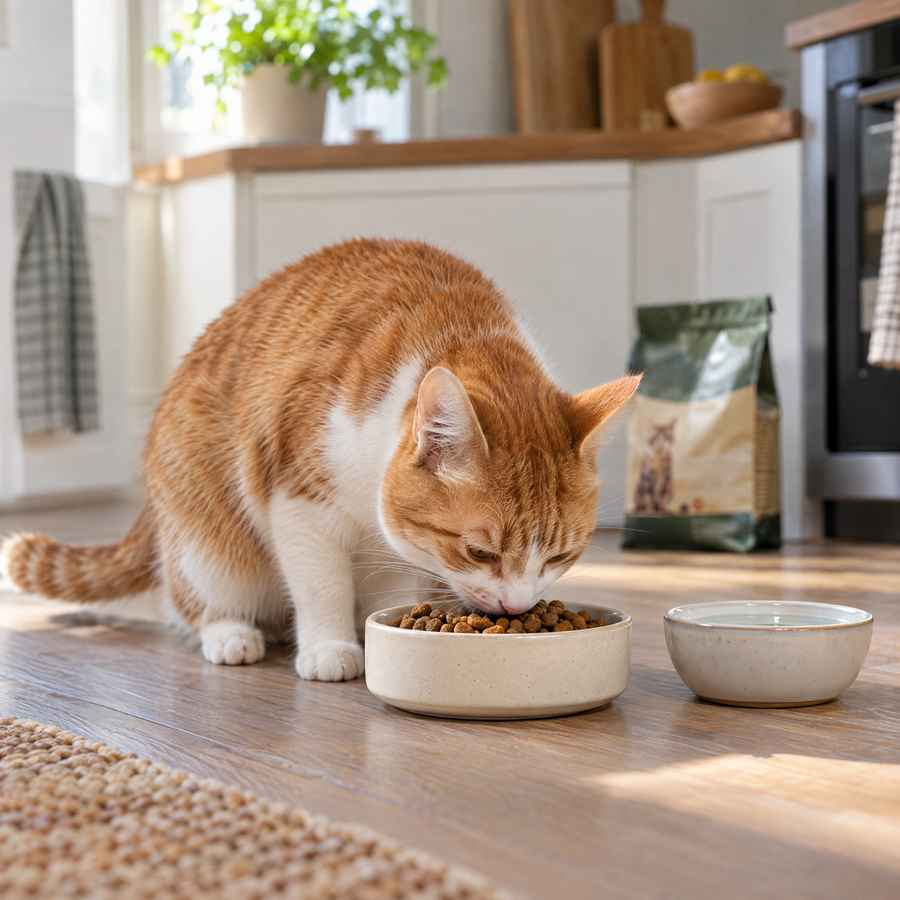
Walk into the cat food aisle and you’ll find plenty of choices: dry food, wet food, kitten formulas and options for adult cats. With so many bags and cans to compare, it can be hard to know where to start.
The best choice depends on your individual cat. Their age, health, daily routine and even their preferences all play a part.
Start with your cat’s age
Kittens and adult cats have different nutritional needs, so check the label to make sure the food is intended for your cat’s life stage. If you’ve recently adopted a kitten, ask your veterinarian when it’s time to move to adult food. For senior cats or cats with health concerns, your vet can recommend an appropriate diet.
Read the label, not just the front of the pack
Packaging can make a product sound appealing, but the feeding information and nutritional details are more useful when comparing options. Look for food labelled as complete and balanced for your cat’s life stage, and follow the feeding guide as a starting point.
The right portion can vary from one cat to another. Your cat’s activity, body condition and other foods or treats they receive during the day can all affect how much they need. If you’re unsure about portions, ask your vet for guidance.
Wet food, dry food or both?
Some cats enjoy wet food, while others prefer dry food. Each type has different practical benefits, such as convenience and texture. The right choice is one your cat eats happily and that fits their needs.
Whatever you choose, keep fresh drinking water available every day. If you’re thinking about changing your cat’s diet or mixing food types, check with your veterinarian—especially if your cat has a medical condition or needs a special diet.
Make changes gradually
Cats can be sensitive to sudden changes in food. If you’re switching to a new product, introduce it gradually rather than replacing the old food all at once. Mix a small amount of the new food with the familiar one, then increase the new portion over several days, as long as your cat is eating comfortably.
If your cat refuses food or develops digestive problems after a change, pause and speak with your vet. A veterinarian can help you decide whether to continue, slow down or try a different option.
Pay attention to your cat
Your cat’s appetite and routine can tell you a lot. Notice whether they’re eating normally and whether the food suits them. If you spot a lasting change in appetite, weight or behaviour, don’t assume the food is the cause—ask a veterinarian for advice.
Choosing cat food doesn’t have to be complicated. Start with your cat’s age and needs, read the label carefully, and make any changes slowly. With a little patience, you can find an option that works well for both of you.
This article is for general information and is not a substitute for veterinary advice.